Being separated from a spouse or partner is not simply an administrative inconvenience. It can mean missed birthdays, difficult conversations across time zones and the feeling that important plans are on hold. Canada’s spousal sponsorship process is designed to allow eligible Canadian citizens and permanent residents to sponsor qualifying partners for permanent residence. Yet a genuine relationship does not, by itself, make every application straightforward.
A successful file requires the right sponsorship category, evidence that reflects the couple’s real life and careful attention to the rules that apply in 2026. This guide explains who may sponsor, what immigration officers look for, how inland and Family Class applications differ, and which mistakes couples can avoid before submitting their documents.
Who can sponsor a spouse or partner in Canada?
In general, a sponsor must be at least 18 years old and be a Canadian citizen, a Canadian permanent resident or a person registered in Canada under the Indian Act, while satisfying the other applicable sponsorship requirements. A Canadian permanent resident normally must live in Canada to sponsor. An eligible Canadian citizen living abroad may be able to sponsor if they demonstrate an intention to live in Canada when the sponsored person becomes a permanent resident.
Prospective sponsors must also be able to sign the required undertaking and sponsorship agreement and must not be subject to disqualifying circumstances. Examples can include certain outstanding family support obligations, undischarged bankruptcy, particular criminal convictions, or an ongoing undertaking to a previously sponsored partner. The precise rules and exceptions require assessment in each case.
A common misconception is that everyone sponsoring a spouse must meet a fixed minimum income threshold. In most spousal or partner sponsorship cases, IRCC does not impose a general minimum income requirement, although exceptions apply, including certain situations involving dependent children who have dependants of their own. Sponsors must nevertheless understand the financial obligations they assume. Quebec residents also face separate provincial steps and applicable requirements.
If you are evaluating a potential application, Konan Law’s spousal and family sponsorship service provides a direct route to the firm’s relevant immigration services.
Which relationships qualify for sponsorship?
Canada recognizes several relationship categories, but they are not interchangeable. A spouse must be in a legally valid marriage recognized for Canadian immigration purposes. Marriage evidence normally includes the proper registered marriage certificate; an informal ceremony record or a marriage licence alone may not meet the documentary requirement.
A common-law partner is generally someone with whom the applicant has lived in a marriage-like relationship for at least 12 consecutive months. The evidence should establish the shared household and the nature of the relationship, not merely show that the couple has been dating for a year. Temporary separations can raise fact-specific questions and should be explained accurately.
A conjugal partner category exists for certain exceptional situations where the partners have had a genuine, committed relationship for at least a year but marriage or cohabitation has not been possible for reasons recognized under the program. It is not a shortcut for couples who could live together or marry but have chosen not to. Conjugal partner applications are handled under the Family Class and concern a partner living outside Canada.
Choosing the wrong relationship category can weaken an otherwise credible case. Couples should identify the applicable definition first, then build evidence around that definition rather than starting with a pile of photos and hoping it will be enough.
What relationship evidence does IRCC expect?
There is no single photograph, bank statement or social media post that proves a relationship is genuine. Immigration officers examine the evidence as a whole. The aim is to demonstrate a real, continuing partnership rather than a relationship entered into primarily for immigration status.
Depending on the circumstances and the applicable document checklist, useful evidence can include proof of shared residence, joint leases or property ownership, household bills, financial support, beneficiary designations, travel records, communications, photographs with family and friends, and documents showing how the couple has maintained the relationship over time. For couples who have lived in different countries, travel history and consistent communication records may carry particular importance.
The strongest evidence is not always the most extensive evidence. Hundreds of unsorted screenshots can make a genuine story harder to understand. A more effective approach is to select representative records, place them in a clear timeline and explain unusual facts, such as extended periods apart because of work, study, military obligations or immigration restrictions.
A short, honest narrative can help connect documents to the relationship’s development: how the couple met, when the partnership became serious, whether they have lived together, how they manage daily responsibilities and what their plans are. That narrative should be consistent with the forms and supporting records. It should never be embellished to make the relationship appear more conventional than it actually is.
Inland versus Family Class sponsorship: what is the difference?
For eligible spouses and common-law partners, Canada provides different application classes depending on the circumstances. The Spouse or Common-Law Partner in Canada Class generally concerns applicants living together in Canada who meet the class’s status or public-policy requirements. The Family Class is commonly used where the sponsored person resides outside Canada, although some couples living together in Canada may also apply under the Family Class where appropriate.
These options are not merely filing preferences. They can affect practical matters such as travel considerations, status, the availability of certain work permit measures and appeal rights if an application is refused. Under IRCC guidance, a refusal in the Spouse or Common-Law Partner in Canada Class does not carry the same Immigration Appeal Division sponsorship appeal route as an eligible Family Class refusal.
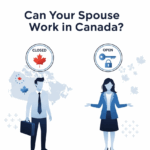
A couple living together in Canada should also avoid assuming that submitting sponsorship documents automatically extends temporary resident status or creates permission to work. Immigration status and work authorization must be assessed separately. Some sponsored spouses or partners may qualify for an open work permit under the applicable policy, but eligibility and timing conditions must be checked against current IRCC instructions.
Before selecting an application class, consider where each partner lives, current legal status, anticipated travel, any prior immigration issues and the consequences of a possible refusal. These factors can matter more than a simplistic comparison of published processing times.
What are the sponsor’s financial responsibilities?
When a person sponsors a spouse or partner, they generally sign an undertaking to provide for the sponsored person’s basic needs for a prescribed period. For spouses and partners outside Quebec, the usual undertaking is three years from the date the sponsored person becomes a permanent resident. This obligation can continue even if the relationship later breaks down or the sponsor’s financial circumstances change. Quebec has its own undertaking arrangements and should be checked separately.
This is why the absence of a general minimum income requirement should not be misunderstood as the absence of financial responsibility. Sponsorship is both a family reunification process and a legal commitment. Prospective sponsors should understand it before applying, particularly if they previously sponsored another person or have outstanding support obligations.
Common spousal sponsorship mistakes in 2026
One mistake is assuming that a marriage certificate is enough. A legal marriage may establish marital status but does not remove IRCC’s interest in the relationship’s genuineness. Another is submitting documents that conflict with the couple’s own timeline. Differences in dates, addresses or travel histories can attract attention unless there is a reasonable explanation.
A third mistake is failing to address previous marriages, earlier sponsorships, children or prior immigration refusals where disclosure is required. Dependants must be properly declared and assessed under the applicable rules, including some who will not accompany the principal applicant. IRCC’s special temporary public policy for certain previously undeclared family members ended in September 2026; applicants should not assume that an earlier exception remains open.
Couples also sometimes rely on outdated online advice about open work permits, processing times or an automatic right to appeal. Policies evolve, and a blog written several years ago may no longer reflect current rules. Use the latest IRCC document checklist and program instructions for the application class being filed.
Finally, avoid rushing a submission simply to get a place in the queue. A well-organized application with a coherent narrative and the correct supporting documents is generally more useful than a hurried upload that creates preventable requests for clarification.
What happens after an application is submitted?
IRCC assesses the sponsor’s eligibility and the sponsored person’s eligibility and admissibility. Depending on the case, the process may involve biometrics, medical examinations, background checks, requests for further documents or an interview. Timelines vary; no lawyer can promise a specific approval date or result.
Couples should monitor official correspondence and keep their contact details current. If circumstances change — for example, an address, marital situation, travel plan, or family composition — consider whether and how IRCC must be notified. Accurate updates help ensure that the application continues to reflect the true circumstances.
An applicant who wishes to work while a sponsorship application is processed should review the separate open work permit options rather than treating permanent residence submission as work authorization.
How an immigration lawyer can support a sponsorship application
A sponsorship lawyer can help assess whether the sponsor and partner meet the relevant definitions, identify the correct application class and develop a sensible evidence plan. Legal support may be especially valuable in cases involving long-distance relationships, previous refusals, children from earlier relationships, complex status questions or concerns about admissibility.
For straightforward cases, the main benefit may be clarity and a thorough application review. For complex cases, it may involve identifying legal obstacles early, explaining what evidence is actually required, and developing a strategy that fits the couple’s circumstances instead of forcing their story into a generic template.
Konan Immigration Law Firm assists couples and families with Canadian immigration and sponsorship matters. If you would like to discuss your eligibility, the evidence supporting your relationship or the appropriate application route, book a consultation with Konan Law. The goal is to help you prepare an accurate, well-supported application while recognizing that every relationship and immigration history is different.